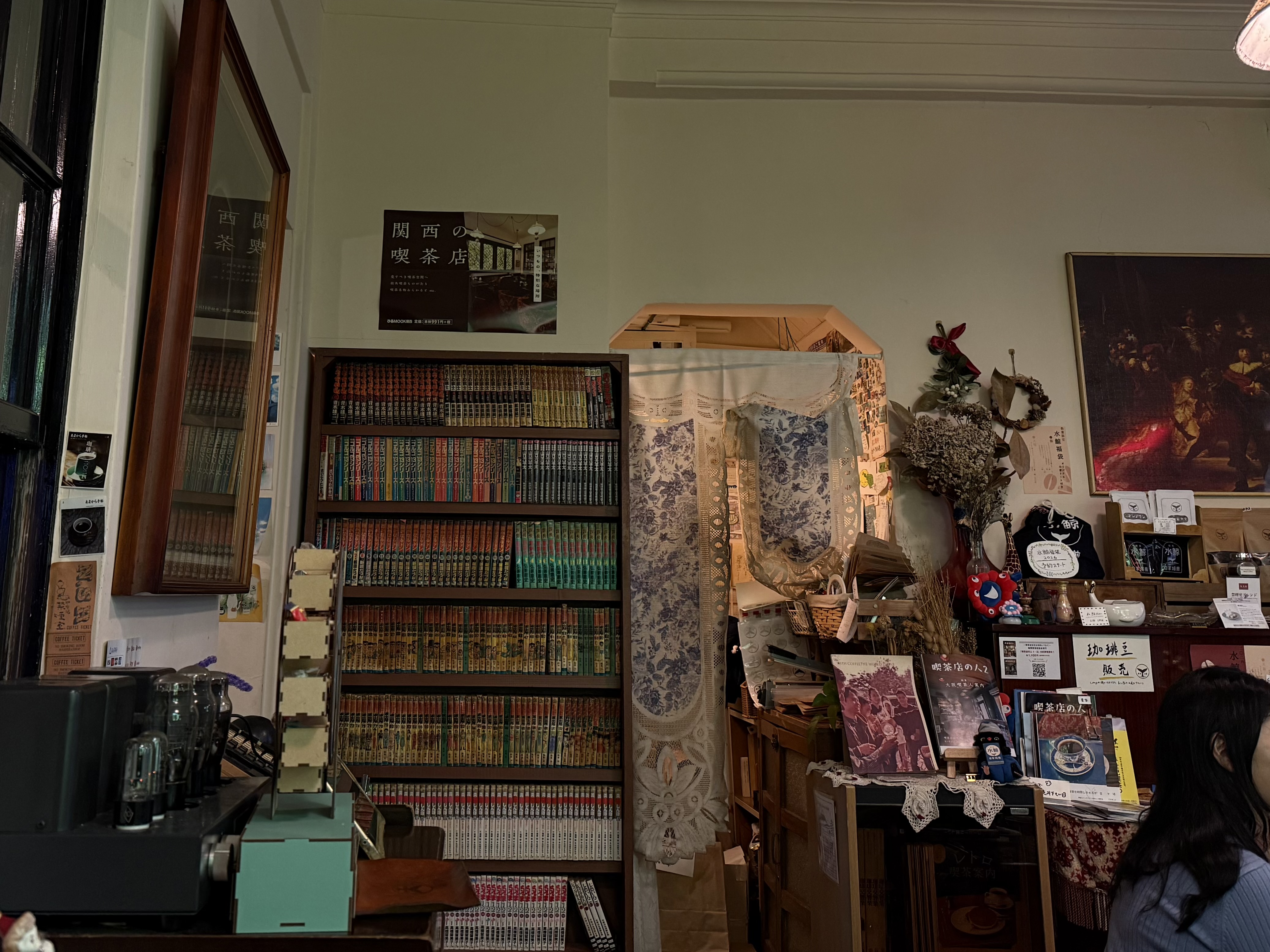
On Christmas, I visited 喫茶水鯨, a kissaten situated in the Awaza area of Osaka. I stumbled upon this kissaten quite some time ago online- likely on Tabelog or some similar site- and was instantly drawn in by the aesthetics of both the interior and menu offerings. As I had only glanced briefly at photos online, I was completely caught off guard by the historical aspect of the kissaten upon visiting.
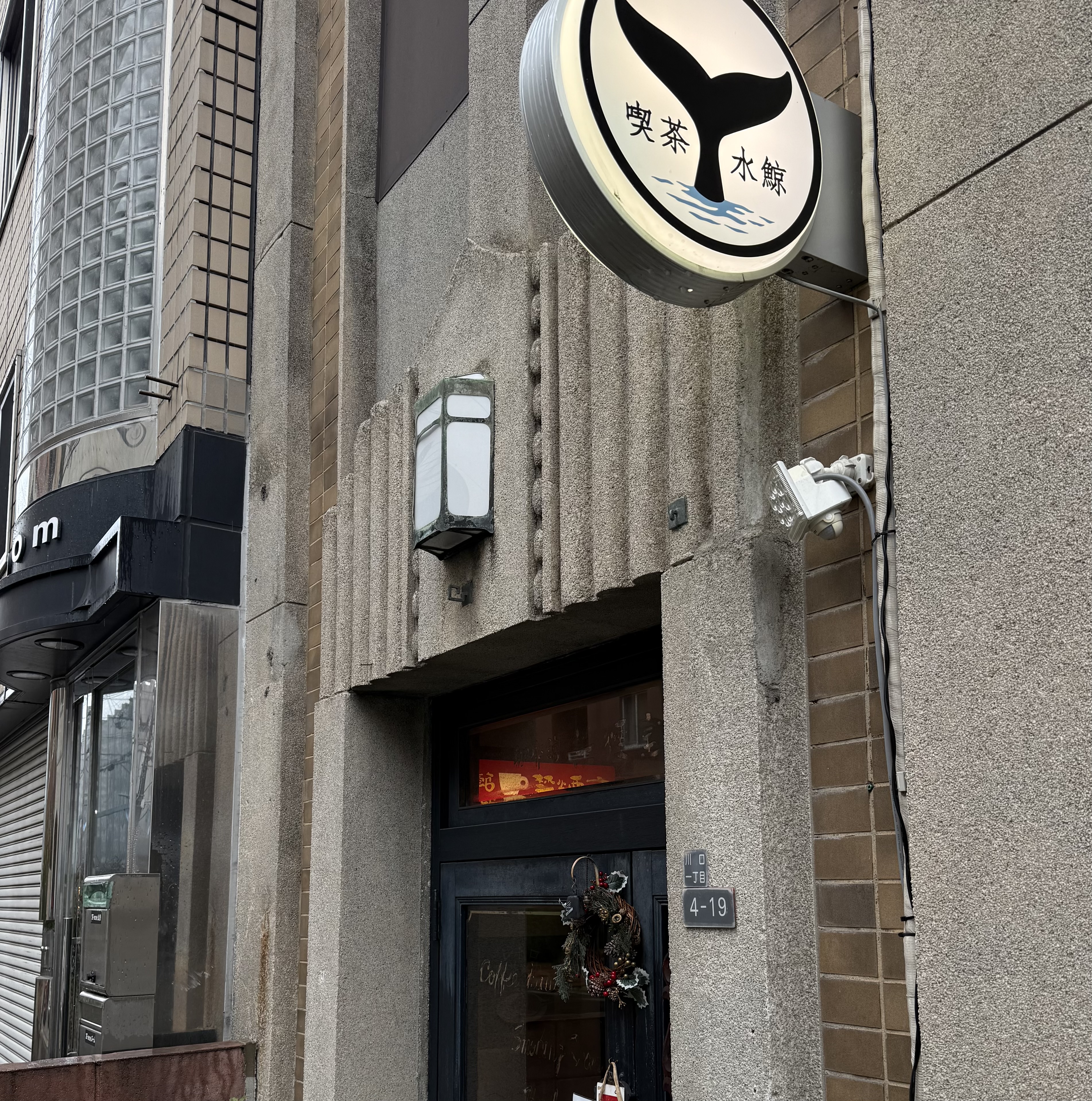
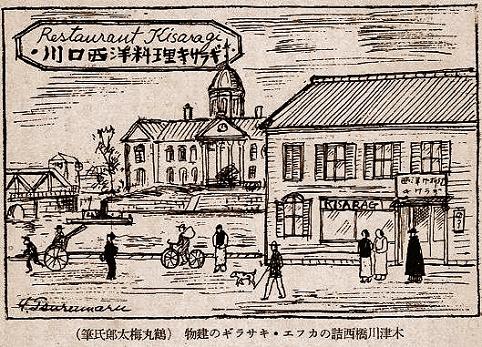
喫茶水鯨 is located in the former Kawaguchi Settlement area of Osaka. Lots were sold off to Western buyers, with the majority being sold to the British. The area ended up being mostly inhabited by missionaries, who erected Western-style brick houses and paved roads. An assortment of stores and restaurants were built as well- including カフェ・キサラギ, Osaka’s first-ever kissaten.
This building now houses 喫茶水鯨, though it’s unclear how much of the original structure remains, as portions of the Kawaguchi Apartments were likely demolished at some point. Regardless, I can appreciate the relevance of the area in terms of kissaten history.
If you pay a visit to Awaza, your first impression will likely be that it’s a rather dull area- it now serves primarily as a warehouse district, so it’s rather devoid of color or anything particularly eye-catching. Upon entering the street where 喫茶水鯨 is located, my partner and I were both struck by the sudden transition from a cold warehouse district to a street lined with late-1800s Western architecture. Directly across from 喫茶水鯨 stands Kawaguchi Church, a Western-style church dating back to the Kawaguchi Settlement era- a surprising sight, as such ornate Western churches are rare in Japan.
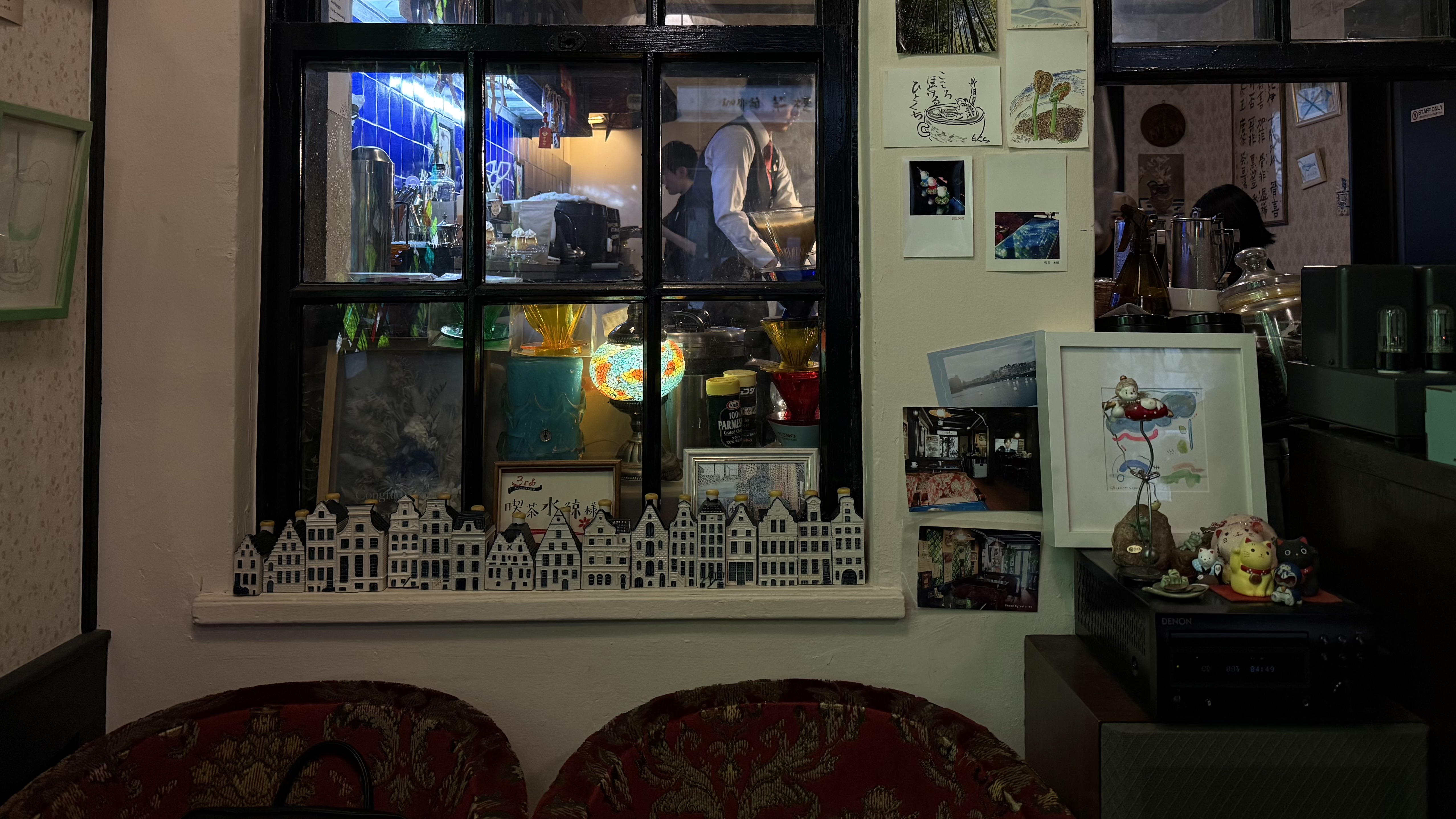
The history of 喫茶水鯨 extends beyond the area it’s situated in- although the kissaten only opened in 2021, you’ll find that the interior, tableware, and generally all aspects of the kissaten are remarkably faithful to the Showa era. This is because the owners of 喫茶水鯨 inherited the interior of a Kanazawa-based kissaten called 珈琲館 禁煙室 and re-opened it in Osaka. 珈琲館 禁煙室, a seemingly well-beloved kissaten, closed after 40 years when its owner was no longer able to continue running the store. Having previously visited 珈琲館 禁煙室, the current owners of 喫茶水鯨 were deeply moved by the space’s natural ability to foster lively conversation and connection with others (the true power of a kissaten, if I might add), and chose to extend its life.
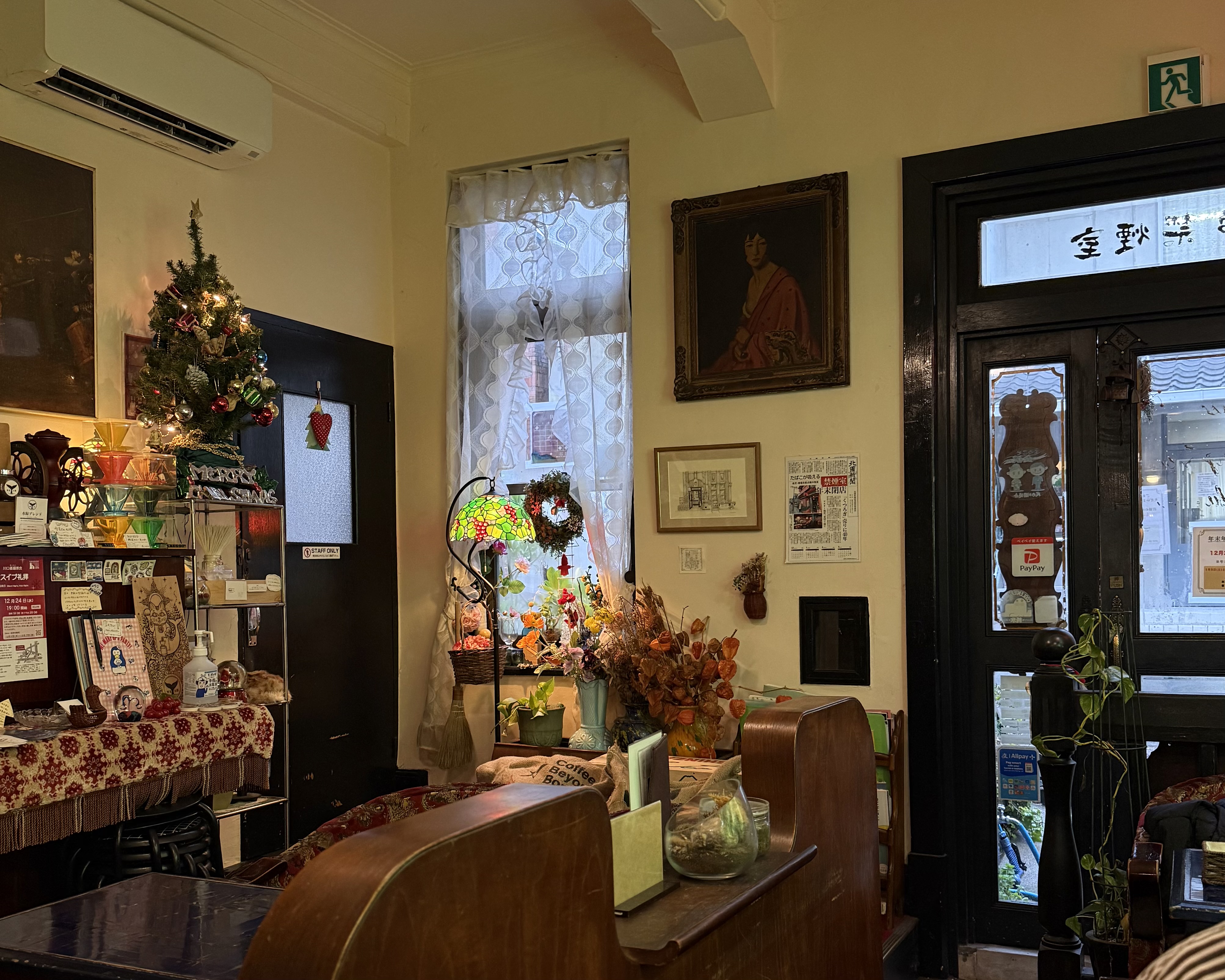
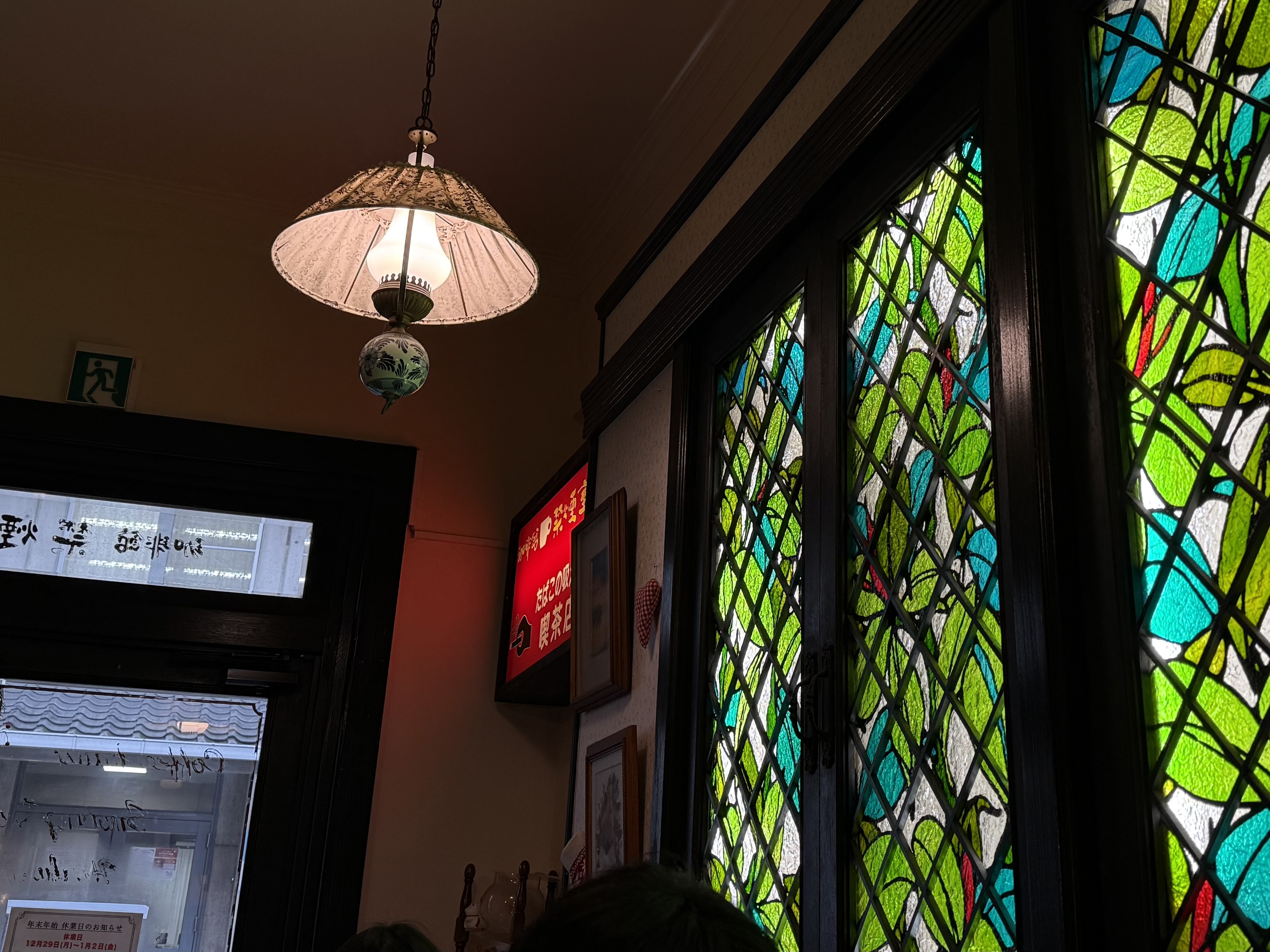
Above all, I find it extremely admirable when people are unashamedly passionate about something, and I believe the key to a beautiful kissaten lies in an owner whose passion can be felt in both the atmosphere and the menu. The owners even went so far as to move over the stained glass windows from the original kissaten, thoughtfully placing a backlight behind them so you can enjoy the stained glass as if you were still sitting in 珈琲館 禁煙室. The sense of heritage is palpable throughout the building, and when comparing photos of the original kissaten with 喫茶水鯨, it becomes clear that the owners went to great lengths to preserve every detail of 珈琲館 禁煙室.
It’s quite rare to find a spot with such a deep history, and although I could continue writing about it, it’s probably best to move on to the menu items.
The most popular menu item is the three-color cream soda, served in replica glasses based on the original kissaten’s glassware. Although I’m fond of cream sodas, I chose to pass this time in favor of pudding- I also suspected the coffee would be particularly good. Alongside sweets and drinks, we ordered Neapolitan and omurice from the lunch menu.
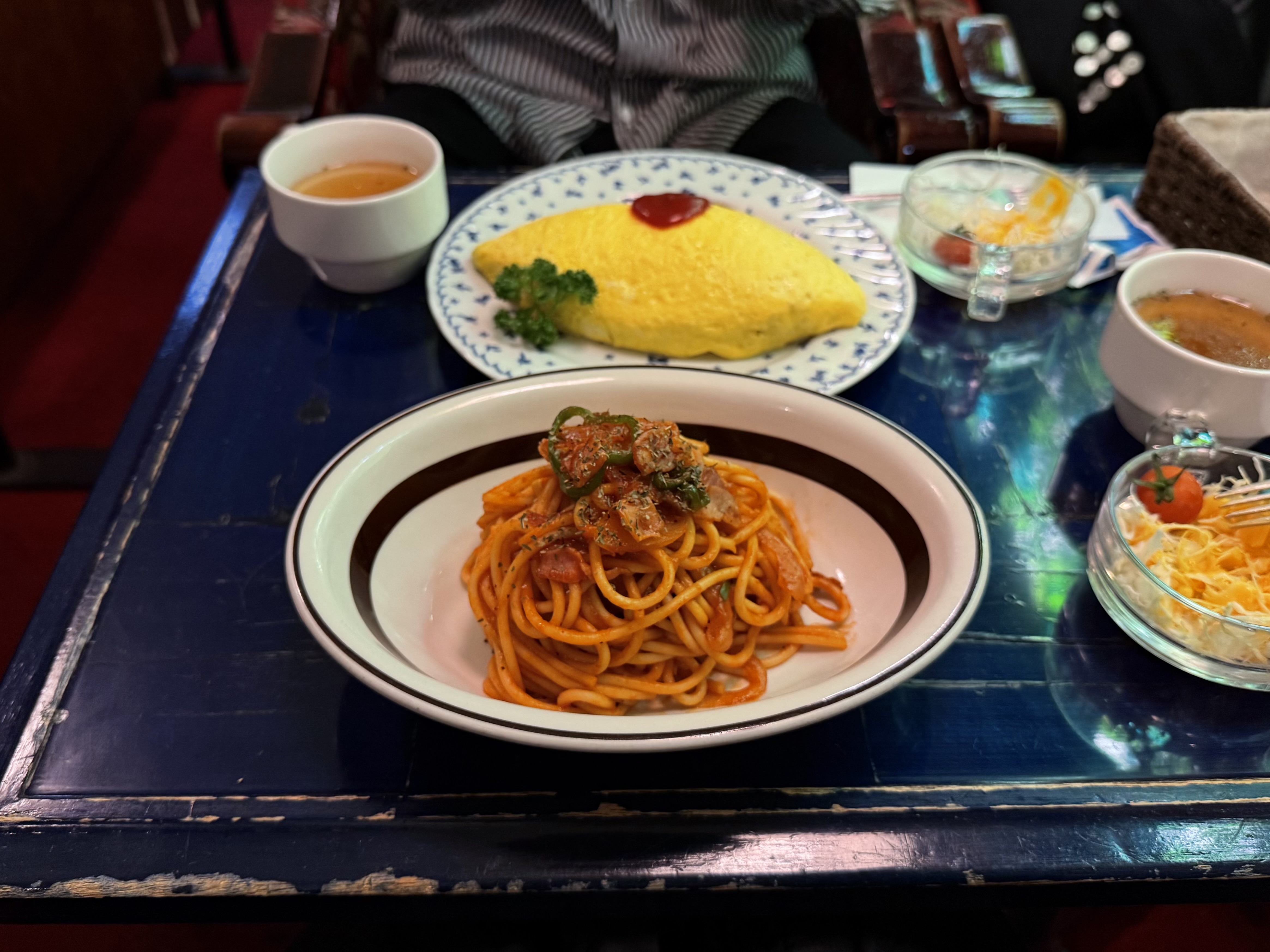
Both lunch items arrived in unmistakably retro tableware. The lunch menu items were comfortingly satisfying- the Neapolitan featured a generous mix of ingredients and was saucy but not greasy. The omurice was neatly set and modest in size, with a firm texture that felt true to older kissaten styles- far from the soft, runny versions that have become common in recent years.
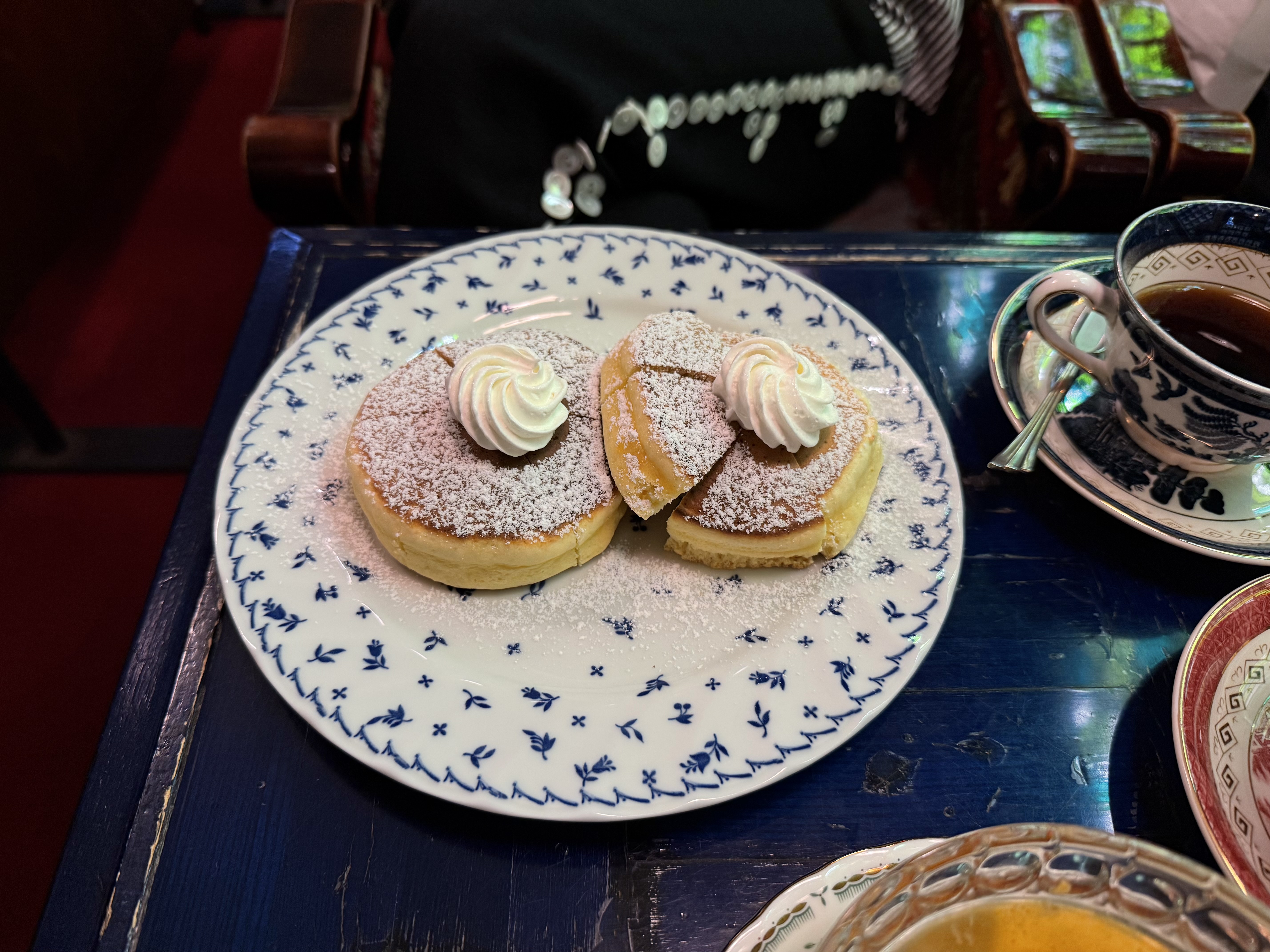
For drinks and desserts, we ordered the house blend coffee with pudding and hotcakes.
The coffee was well-balanced, with no hint of astringency- a clean, restrained bitterness, contrasting beautifully with the desserts. Easy to drink straight and easy on the stomach. For those into coffee, the kissaten also offers a more in-depth coffee menu with selections from various regions around the world.
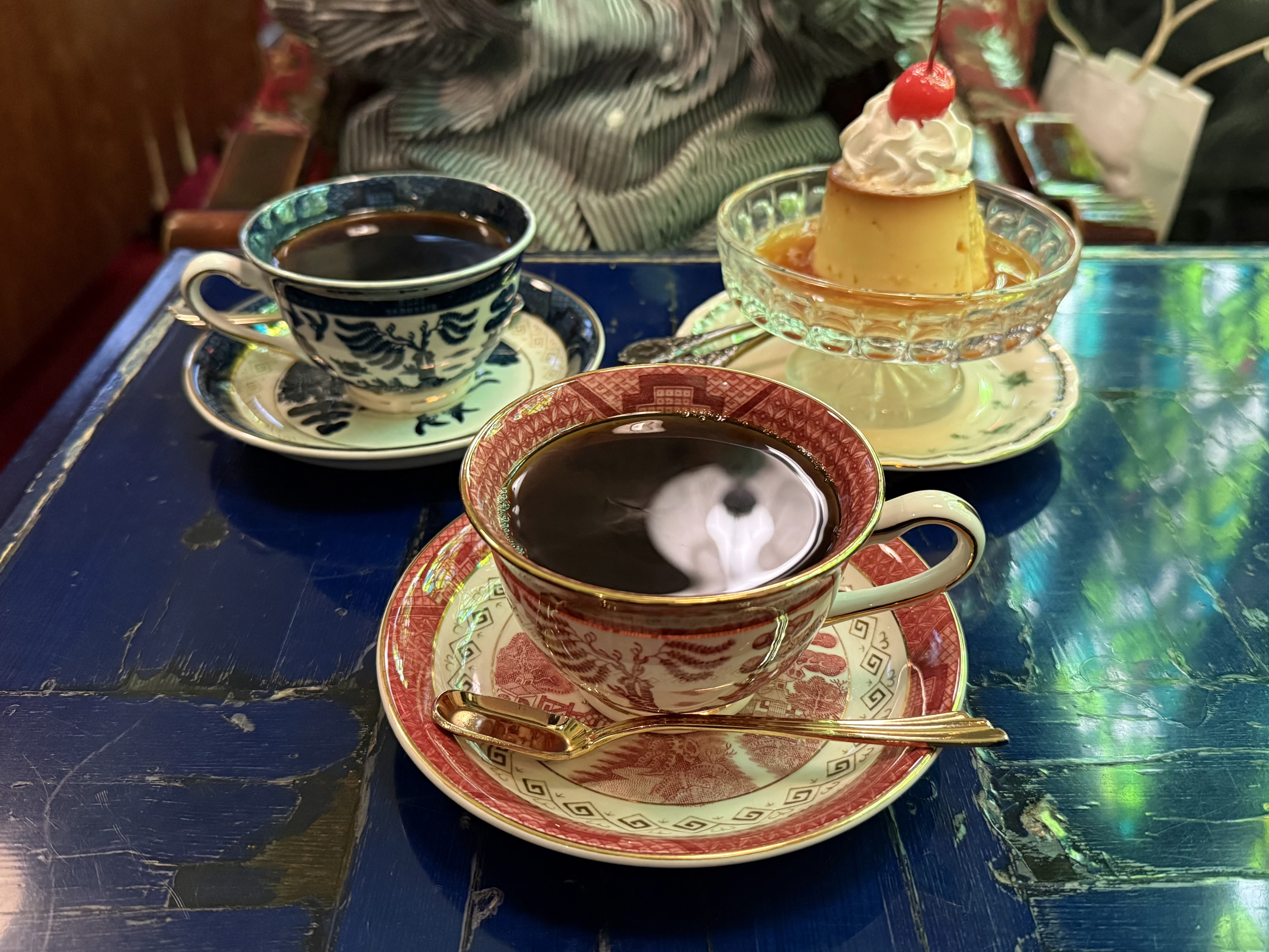
The pudding and hotcakes felt true to Showa-era kissaten offerings- firm and not too sweet. I was particularly fond of the pudding, as I feel that it’s harder to find firm pudding nowadays.
There was no sense of being rushed, and the quiet rhythm of the space made it easy to linger for longer than intended.